
If you’re learning the Luo language, one of the first things you’ll want to know is how to say hello. In Luo (more accurately called Dholuo), greetings are very important and often depend on the time of day and the situation.
In this guide, “Luo” and “Dholuo” refer to the same language. You’ll learn the most common ways to say hello in Luo, how to pronounce them, and when to use each greeting naturally.
The Most Common Luo Greetings
Idhi Nade?
Meaning: How are you? (literally ‘how do you go?’)
Language: Luo (Dholuo)
Use: Casual, everyday greeting
Idhi nade? is a simple and friendly way to say hello. It’s commonly used with friends, family, and people you know well.
When greeted this way, the response would be adhi maber which means “I’m fine” (literally ‘I go well.’).
👉 This is a great first Luo greeting for beginners.
Luo Greetings by Time of Day
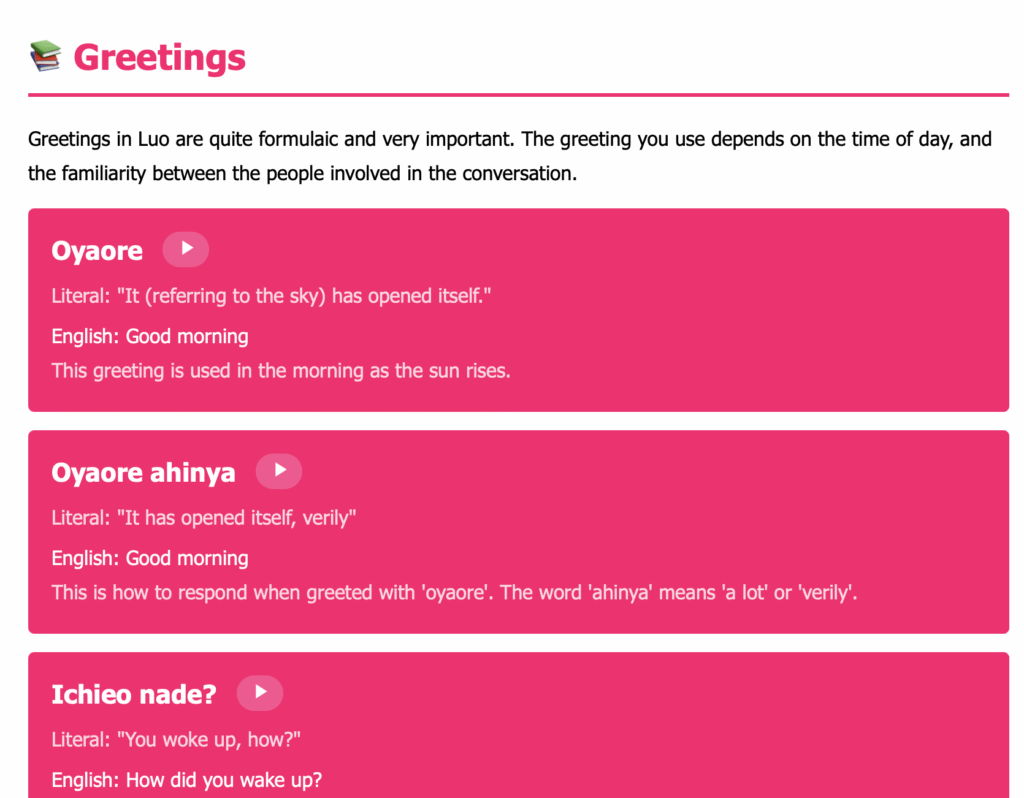
Oyaore — Good morning
Used in the morning, often before midday. This greeting is polite and appropriate for both casual and respectful situations.
It literally means “It (the sky) has opened up”.
The response is:
Oyaore ahinya
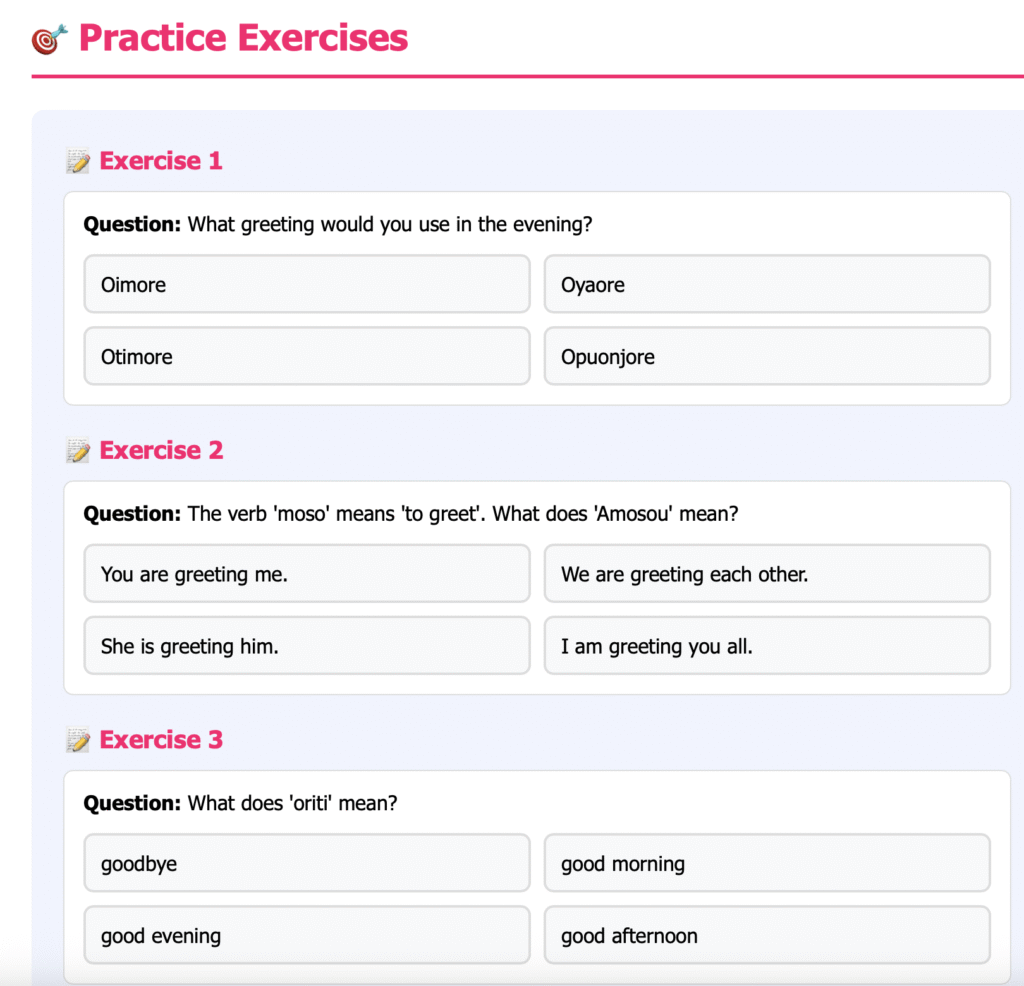
Oimore — Good evening
Used later in the day when greeting someone in the afternoon.
It literally means “It (the sky) has covered itself”.
The response is:
Oimore ahinya
Informal Greetings
There are some informal greetings used between people who know each other well. Here are a few examples:
Nang’o? — What’s up?
This is a light, casual way to greet someone. It’s often used between two youth, or two people who are relaxed around one another.
The response is:
Ber (which means ‘good’).
Ber? — You alright?
This is another informal way to greet someone.
The word ‘Ber’ means ‘good’ so when used as a greeting, it’s like asking someone if they are good, or if they are alright.
The response is:
Ber! (good!)
Wachna — Talk to me
It’s the equivalent of “What’s up” or “Chat to me”. Very informal.
The response is:
Onge wach (which means ‘there’s nothing to say.’).
Practice Saying Hello in Luo
The best way to learn Luo greetings is to hear them spoken by native speakers and repeat them out loud.
👉 Record your Luo (Dholuo) greetings on Echo, let other learners hear them, get a native speaker’s review, and start speaking confidently.
Related guides:
.